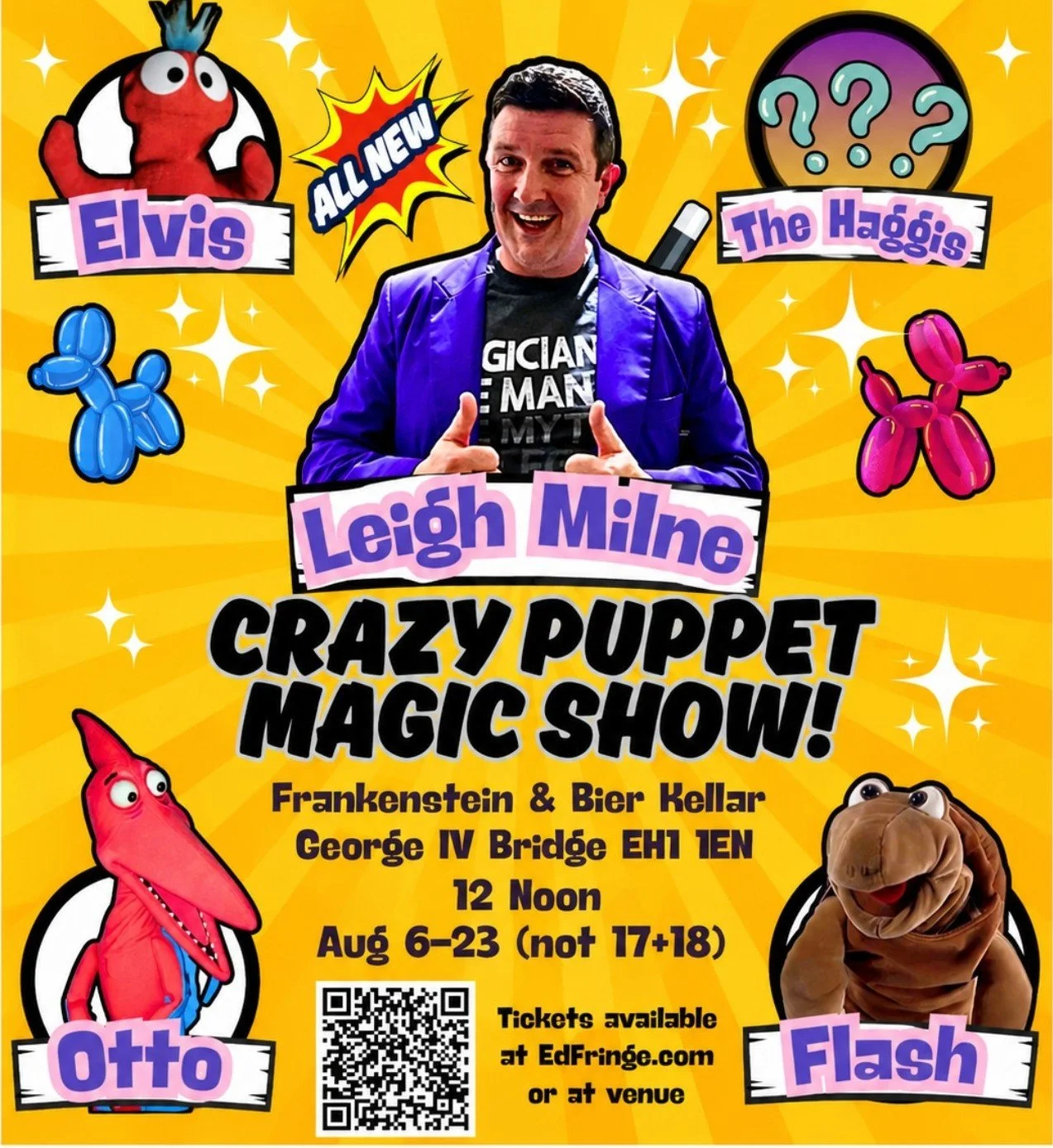
Thoughts On Creating A New Show
My Edinburgh Fringe Show: Why I Keep Writing a New One Every Year
Every year I try to write a completely new show for the Edinburgh Fringe.
And every year, I end up performing about 40% of the material I do every weekend at birthday parties anyway.
Why? Because I know it works.
I know the kids will laugh. I know the parents will enjoy it. I've performed it dozens, if not hundreds, of times. It's tried and tested.
That's not me saying, "Yeah, I know how great my work is."
It's simply true.
The material is proven every Saturday and Sunday.
So there is always a temptation to take the stuff I know works, put it into a Fringe show and relax.
But this year I really wanted to write something original.
The problem with having a life
The problem was that I had a lot of commitments earlier in the year.
Towards the start of the summer, everything was coming to a head. My main focus in July was a rather large and rather important gig I'd been booked for in London.
That meant most of my attention throughout May, June and July was going into that.
Thankfully, it paid off.
The gig went well, the audience were very happy, and I was delighted with how it turned out.
But there was a slight problem.
I had all these ideas for the Edinburgh Fringe, and I simply hadn't had enough time to develop them. And that's my fault. I had ideas. I knew roughly what I wanted to do. But ideas aren't the same thing as a finished routine.
You need to rehearse them.
You need to practise them.
You need to work out whether they're actually practical.
And, most importantly, you need to find out whether they're any good.
By the time the Fringe was approaching, I hadn't managed to do all of that.
But I still wanted to do a completely new show.
So what actually made it into the show?
There was one little routine I knew I was always going to keep.
It's a great little five minutes, I really enjoy performing it, and I suspect it will probably appear in every show I ever do.
But apart from that, the other 50 minutes of the show was either material I'd never performed before or material I hadn't performed for at least a decade.
Some of it was stuff I'd done when I was first starting out in magic, when I was operating at a very amateur level.
So I was effectively taking some old ideas, some completely new ideas, new puppets and new magic and throwing them all into one 55-minute show.
And, surprisingly, it worked.
Enter Hamish
I opened the show with a piece of rope, which turned into some very funny magic, and then the show continued with new puppets and new routines.
But there was one thing I learned very quickly.
The audience is always going to tell you what's working.
You just have to listen.
At the end of the show I used a puppet called Hamish.
Hamish is a small, red-haired, freckle-faced, cheeky little boy.
I think I used him in the first two shows, and while the reactions he was getting were good, they weren't great.
So on the third day I replaced him with Chester.
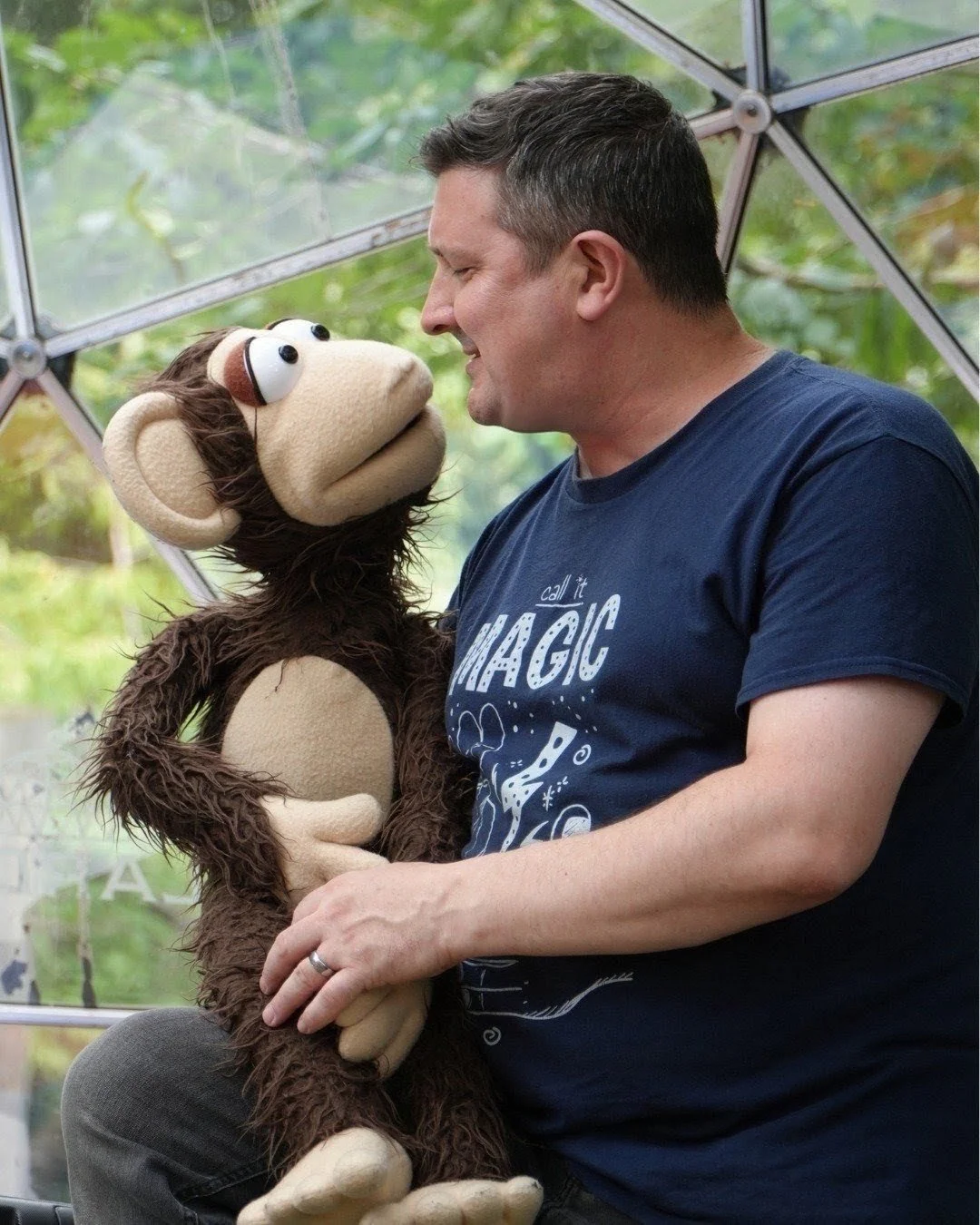
Chester is my reliable monkey puppet.
And, yep, once again, he proved exactly why he's reliable.
The finale improved by at least 50%.
People really love that cheeky monkey.
So Chester stayed. Sorry, Hamish.
The routine that nearly derailed the show
There was another routine that I came up with only a few days before the Fringe.
I thought, "Right, I'll add this little routine."
I'd just come up with the idea. I thought I could quickly build a prop.
So I did.
The prop wasn't the problem.
The execution of the routine was the problem.
But by that point I'd committed to it.
And, more importantly, the routine allowed me to do something else which progressed the show, so I decided to keep it in.
For the first couple of weeks, it was probably one of the low points of the show.
But gradually, I worked it out.
I changed things.
I learned what worked and what didn't.
And by the end of the run of The Crazy Puppet Magic Show, it was getting laughs.
That's one of the great things about doing the Fringe. You get to learn in front of an audience.
Why I keep doing this to myself
I always find writing a new show a challenge. Writing a script for myself is one thing. Writing a script for myself and a puppet is considerably more difficult.
There's another character to think about.
The puppet has to have a personality. The dialogue has to sound natural.
The magic has to fit around the comedy.
The comedy has to fit around the magic.
And somehow it all has to become one coherent show.
But I love it. Because it pushes me out of my comfort zone. It pushes me past my boundaries. And it forces me to learn.
Every day of a Fringe run teaches me something.
A joke that I thought would work doesn't.
Something I wasn't particularly confident about gets a huge reaction.
A puppet I thought was going to be brilliant gets replaced by a cheeky monkey.
A routine that was terrible on day one is getting laughs by the final week.
And that's the real joy of it.
By the end of the Fringe, I've got something I didn't have when I arrived: A polished, 55-minute act. Brand new. Rehearsed. Tested in front of real audiences. And ready to be performed anywhere, at any time. And that's one of the reasons I love doing The Crazy Puppet Magic Show.
I get to spend a month finding out what the show actually is. And by the time I'm finished, I have a new show.